
Room temperature and low-temperature processing
The entire process is carried out at room temperature and low temperature, completely preventing protein denaturation.
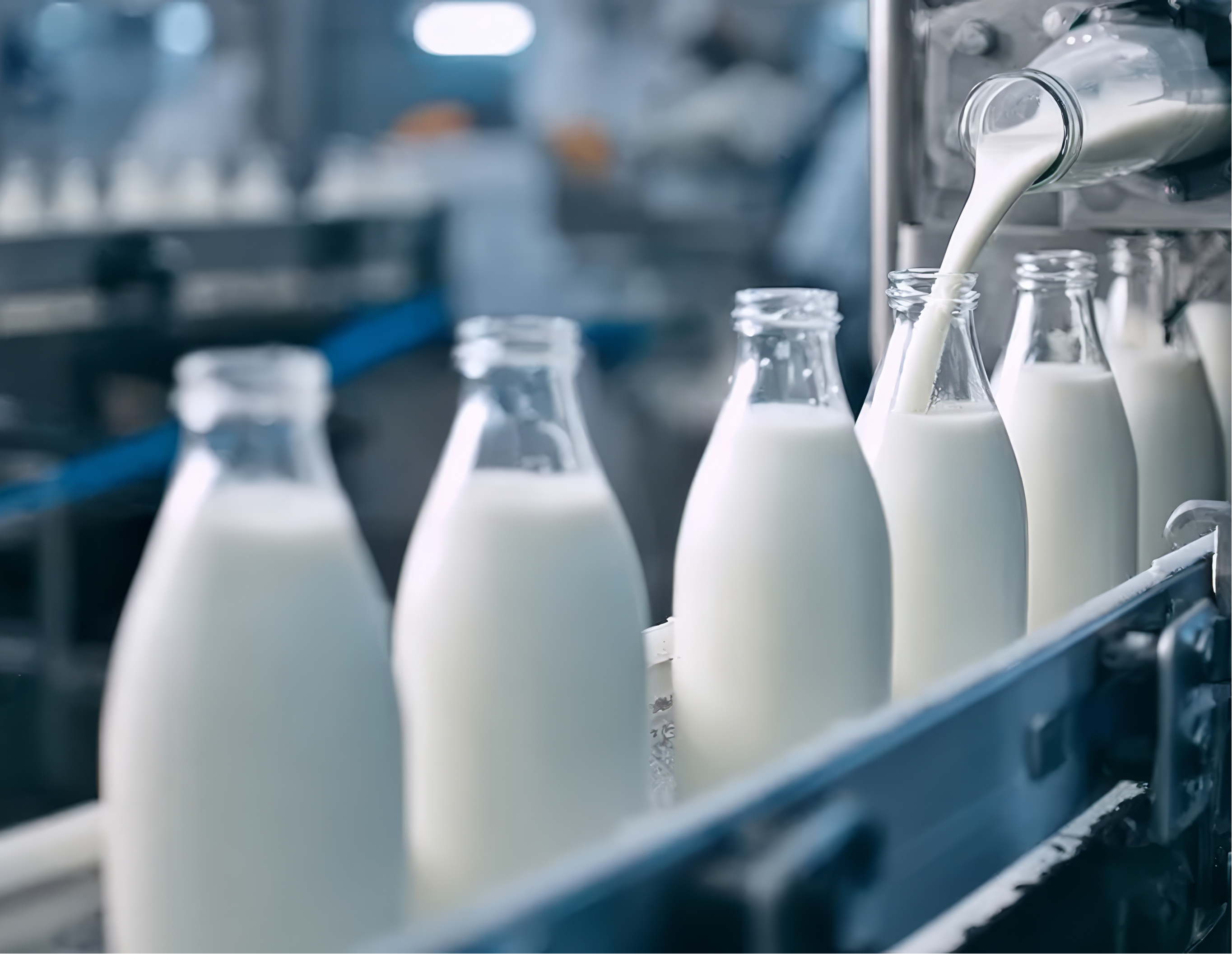
This scheme is based on the normal pressure high-concentration reverse osmosis technology. It uses the osmotic pressure difference between the two sides of the membrane as the driving force, and does not require high temperature or high pressure. It provides an integrated solution for gentle dehydration and concentration of liquid dairy products such as fresh milk, skimmed milk, whey, and fermented milk base materials, suitable for production scenarios such as concentrated milk, cheese raw materials, whey protein concentrate liquid, infant formula milk raw materials, and high-end dairy product ingredients.
Performance parameters
| Compatible materials | Fresh cow's milk / goat's milk, skimmed milk, reconstituted milk, fermented milk concentrate, whey liquid, functional dairy base liquid |
| Content of solid substances in the feed material | 8%~18% |
| Material compatibility | Tolerant to high-protein, high-colloid, and trace-fat systems, resistant to organic contamination, and preventing protein denaturation |
| Protein/Active Ingredient Retention Rate | ≥99.6% |
| Thermal retention rate of nutritional components | The comprehensive retention rate of proteins, active factors and boswellic acids is ≥ 96% |
| Feed temperature | 15 - 35℃ (Full process under normal temperature and low-temperature conditions, no heating required) |
The entire process is carried out at room temperature and low temperature, completely preventing protein denaturation.

It is driven passively by the natural osmotic pressure difference, without the need for high-pressure pumping, intense shearing, or aeration oxidation. The natural emulsifying colloid structure of dairy products is completely preserved.

It adopts the principle of positive osmosis without high-pressure and pressure-holding adsorption. The protein and fat colloids cannot form a dense contamination layer on the membrane surface, completely solving the problem of membrane clogging that is common in traditional RO membranes in the industry.

Ultra-low energy consumption operation significantly reduces production costs.