
Low pressure
Low-pressure drive, with superior pollution resistance compared to traditional reverse osmosis (RO), achieving high-rate deep concentration.
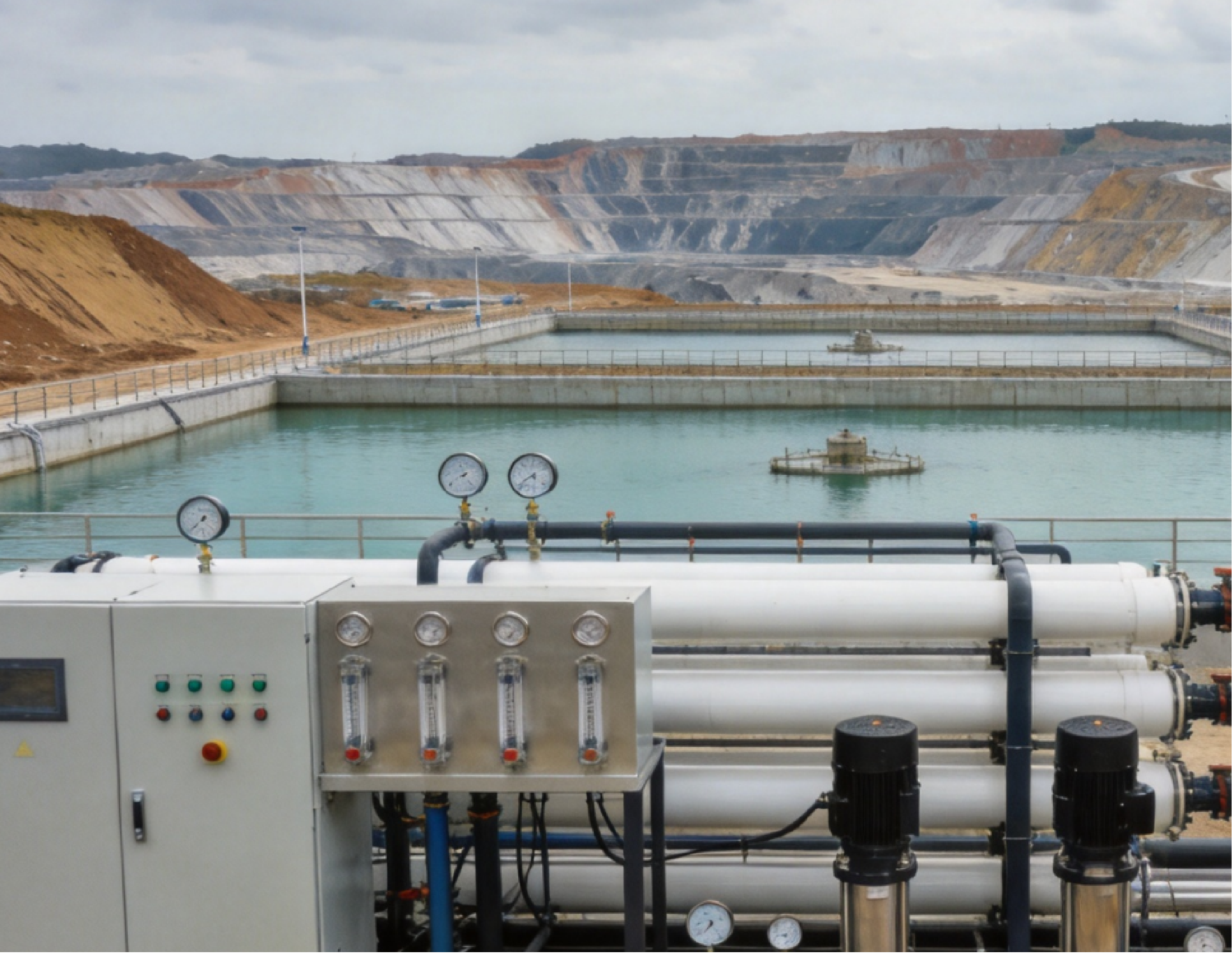
The core of the scheme adopts the principle of natural osmotic pressure difference-driven separation. The entire process operates at normal temperature and near normal pressure without pressure increase, and no high-pressure booster equipment is required. The separation of water molecules is achieved through the osmotic pressure difference between the two sides of the membrane. It can efficiently retain suspended mud, heavy metal ions, hardness salts, colloidal particles, and residual beneficiation reagents in the mine wastewater, effectively preventing the irreversible clogging and scaling failure caused by traditional high-pressure membrane compression. The system has extremely strong resistance to shock, high salt content, and complex water quality. It can perfectly adapt to the harsh operating environment of the mine wastewater with large fluctuations in volume and quality, and multiple types of impurities, as well as unstable working conditions. It can maintain stable separation flux and treatment effect over a long period of time.
Performance parameters
| Inflow water source | Mine water overflow, beneficiation wastewater, tailings leachate, and comprehensive wastewater from the mine |
| Inflow salt content (Total Dissolved Solids) | 3000 - 120000 mg/L, suitable for high and low salinity fluctuation operating conditions |
| Inflow hardness | ≤1200 mg/L (calculated based on CaCO₃), tolerant to hard water conditions |
| Running water temperature | 10 - 40℃, optimal operating condition is 20 - 32℃, capable of withstanding fluctuations in outdoor temperatures. |
| System comprehensive recovery rate | 78%~92% |
| Overall removal rate of heavy metals | ≥99.1% |
| COD/Gelatin Impurity Retention Rate | ≥96.5% |
| Stable membrane flux operation | 7 - 21 LMH (Mine Normal Operating Conditions) |
| Continuous operation capability | 24-hour uninterrupted continuous operation, with excellent resistance to water quality, water volume and temperature fluctuations |
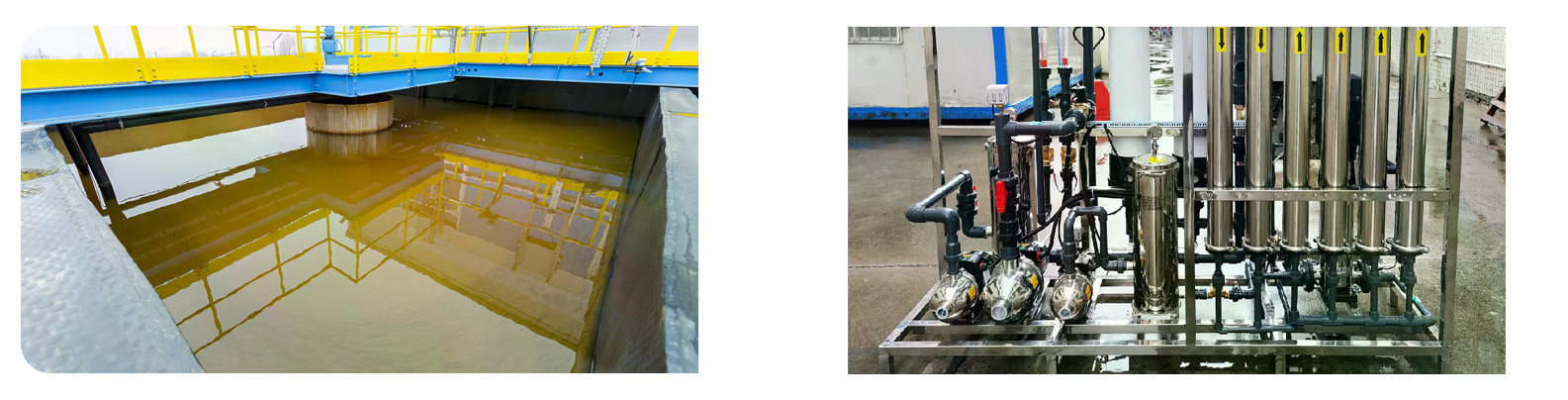
Low-pressure drive, with superior pollution resistance compared to traditional reverse osmosis (RO), achieving high-rate deep concentration.

High-efficiency capture of heavy metals, with an ion capture rate of 97% to 99.5%.

It can operate stably within a wide pH range of 2 to 11, and can directly treat acidic mine wastewater, reducing the dosage of chemicals and effectively solving the problem of high costs.

The water output is stable and the water resources are recycled.