
Low energy consumption
Compared with the advanced pretreatment + RO process, the FO + RO process has lower energy consumption, typically reducing energy consumption by more than 40%.
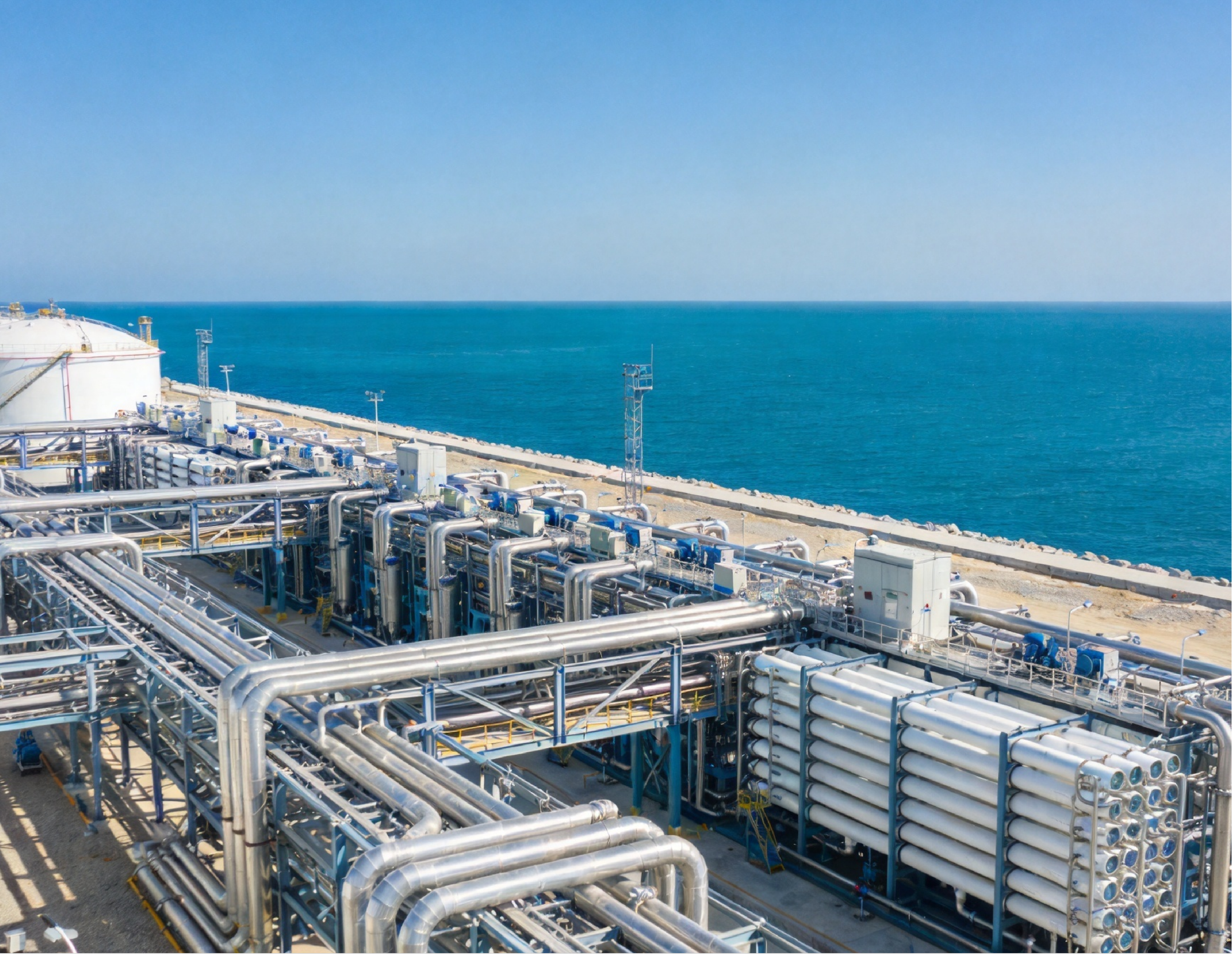
The core of the scheme adopts the non-pressure reverse osmosis separation principle, which is different from the traditional reverse osmosis high-pressure forced filtration mode. The system operates at constant temperature and pressure throughout the process. It relies on the osmotic pressure difference between the drawing liquid and the seawater raw water to drive water molecules to spontaneously pass through the reverse osmosis membrane, accurately retaining salt, suspended solids, colloids, microorganisms, algae and other impurities in the seawater, and achieving efficient separation of seawater and pure water. This technology avoids problems such as membrane surface compaction pollution, salt crystallization blocking the membrane, and frequent component degradation in the high-pressure membrane process from the root. It has extremely strong anti-pollution performance and can tolerate near-sea water containing algae, sediment, and fluctuating salinity. It significantly reduces the difficulty of pre-treatment and the failure rate of the system operation.
Performance parameters
| Inflow water source | Natural seawater, near-sea brackish water, coastal saline water |
| Inflow salt content (Total Dissolved Solids) | 30,000 - 45,000 mg/L standard seawater can tolerate short-term high-salt fluctuations. |
| Running water temperature | 10 - 35℃, the optimal operating condition is 20 - 30℃ |
| Salt retention rate | ≥99.2% |
| Microbial and algal retention rate | 100% |
| Stable membrane flux operation | 8 - 20 LMH (standard seawater conditions) |
| System comprehensive recovery rate | 65% to 80%, higher than the traditional seawater RO process |
| Operating mode | Constant temperature and pressure-free permeation drive, without high pressure, no phase change, and no high-temperature heating |
| Continuous operation capability | 24-hour uninterrupted continuous operation, with excellent resistance to water quality and volume fluctuations |
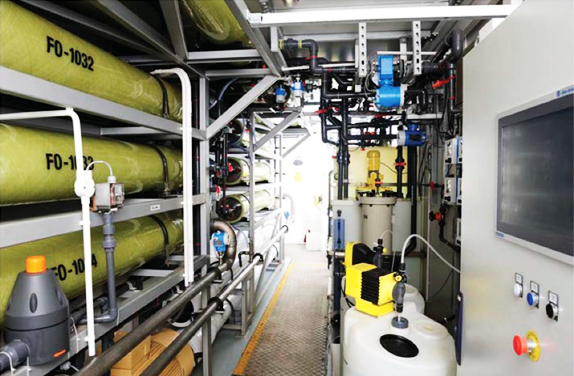
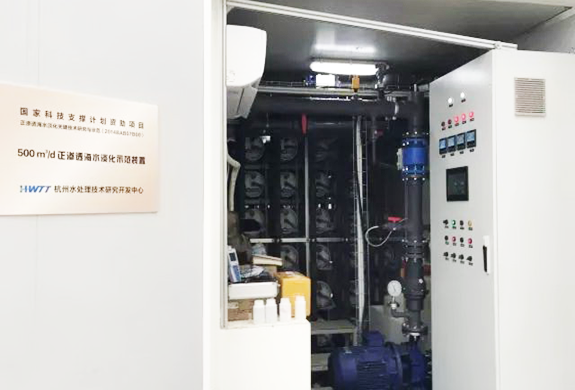
Compared with the advanced pretreatment + RO process, the FO + RO process has lower energy consumption, typically reducing energy consumption by more than 40%.

Compared with conventional reverse osmosis, it significantly reduces the boron content in the final usable water, and the water quality of the produced water is stable and excellent.

Low dirtiness, easy cleaning and simple operation, this type of membrane has a lifespan twice as long as that of conventional reverse osmosis membranes, and the replacement frequency is much lower than that of reverse osmosis membranes.

Superior anti-pollution performance, suitable for complex marine water quality. No high-pressure adsorption effect. Membrane surface is not prone to adhering microorganisms and salt and other impurities. Excellent anti-scaling ability. No pressure and low-temperature operation, significantly reducing energy consumption.